
Descarregue a nossa aplicação zondacrypto: discover crypto
app and start investing now!
Cryptocurrency has had a fairly good relationship with Poland so far. Click here to find out if adoption has been growing in 2022.


When people discuss cryptocurrency these days, they often refer to the fact “it is growing worldwide”, but what exactly does that mean? While crypto might be making waves in certain countries across the globe, the development and integration are complicated. Not every country is crypto-friendly, and the countries that are crypto-friendly still face obstacles when it comes to integrating the concept sufficiently.
Take Poland, for instance. Ever since the first Bitcoin whitepaper was launched back in 2009, Poland has appeared innovative in its introduction. Thirteen years have passed since then, however, and crypto is still not seen as a currency unit, payment instrument or even an electronic alternative to money by the government.
Having said that, cryptocurrency is a decentralised form of fiat currency, which means that it is owned and managed by the users – or, in other words, the people. In this way, it is the people who will inevitably decide whether crypto is the way forward in Poland, and it is the government who’ll have to shape its response around public sentiment.
So have the people come closer to fully adopting crypto in 2022? Is the country any closer to replacing traditionalism with decentralisation? To understand that, it is first important to understand Poland’s history with crypto up to this point:
The Bright History Of Poland And Crypto
Ten or so years ago, Poland was one of the first and only countries in Europe to invite cryptocurrency in with open arms. In fact, at one stage, the official currency of Poland – the zloty - was the eleventh most popular currency in Bitcoin trade.
In October 2014, the price of Bitcoin was only $387, but that didn’t stop Poland from becoming the first country to accept the use of BTC by patients in Medicover Hospital, in Warsaw. The hospital treated more than 8,000 patients, and each one of them could pay for their hospitalisation, treatment and other bills using their invested crypto tokens.
Poland also became the first country in the world to have its very own Bitcoin Embassy. This was known as Ambasada Bitcoin, and it was used to not only promote the use of Bitcoin in Poland, but also build a community that would aid the coin in its country-wide adoption (it should be mentioned, however, that this embassy was eventually shut down due to legal issues). As well as this, after the price of Ethereum grew toward the end of 2020, the Polish city Olsztyn even introduced its own Ethereum-based ecosystem to improve its municipal sector – with the plan to create its very own smart city in the future.
But it wasn’t all sunshine and roses for Poland, however. As the popularity of Bitcoin grew, so too did government awareness of its potential instabilities and danger to Polish business. In 2021, they began to take control.
The Regulations Of 2021
In 2018, it was announced that the Polish Finance Ministry was working on a set of regulations for crypto trading – with the Polish prime minister even calling for a ban on crypto trading entirely. Fast forward to 2021, and the Polish government implemented what is known as the AML V Directive.
The goal of this regulation was to introduce instruments to protect against suspicious transactions and increase the transparency of the cryptocurrency sector. They applied to any providers of exchanges or intermediation of exchanges between digital tokens and means of payment. As well as this, they were also focused on maintaining accounts and identifying data which would be used to make such transactions.
Toward the end of 2021, companies needed to sign-up with the Register of Virtual Currencies – which is maintained and supervised by the Polish Ministry of Finance – in order to form an exchange. The problem was the process ended up neither lessening the risk of money losses nor providing security for investors, and entry into the register did not mean crypto businesses could begin, as many banks in Poland ended up refusing to open and maintain a bank account for them.
The Effect On Poland’s Crypto Relationship
In 2022, the effects of this are still being felt, especially when it comes to new businesses choosing Poland as a base of operations. However, although the regulations put into place have been relatively insufficient, they have not harmed the relationship that Poland has with cryptocurrency entirely.
Looking at the numbers, ownership of cryptocurrency in Poland increased to 900,000 toward the end of 2021 – when the government sanctions were being put in place. As well as this, the Polish citizens investing in crypto between the age of 18-25 was around 17.5% from 2018 to 2020. From 2021 to 2022, however, the number jumped to 31.8%, which was a significant increase in just a few years.
This, in many ways, is an indicator of where things might be headed. As mentioned before, if public sentiment is behind cryptocurrency, then this is the most important thing in terms of adoption. Although the government is introducing – or attempting to introduce – certain regulations that will help the system control cryptocurrency, the appetite for blockchain amongst the people is continuing to grow.
But it’s slow. 2022 was not a big year as far as crypto adoption was concerned, but there was certainly a healthy, steady growth to be seen in Poland’s crypto integration. Looking back in history shows us that Poland is willing to be a crypto hub, and this sentiment is still ongoing – one needs only point towards Warsaw’s hugely popular CryptoVerse events – and in terms of the future, it is likely that Poland will continue to grow (albeit slowly) towards complete crypto adoption.
DISCLAIMER
This content does not constitute investment advice, financial advice, trading advice or any other type of advice and should not be considered as such; zondacrypto does not recommend buying, selling or owning any cryptocurrency. Investing in cryptocurrencies involves a high degree of risk. There is a risk of losing invested funds due to changes in cryptocurrency exchange rates.
Withdrawing from zondacrypto? Avoid These Common Travel Rule Mistakes.
At zondacrypto, compliance and security are key priorities. When you're withdrawing crypto, you'll encounter a ...

Breakthrough for ZND - Rollman Management Digital Invests $20 Million in ZND Project!
It’s Official Rollman Management Digital will invest $20 million in the ZND platform. This is a milestone for the ...
.png)
A March full of wins - awards, conferences, and new ambassadors on board
We'll remember March at zondacrypto as a month packed with events, recognition, and fresh perspectives. What did ...

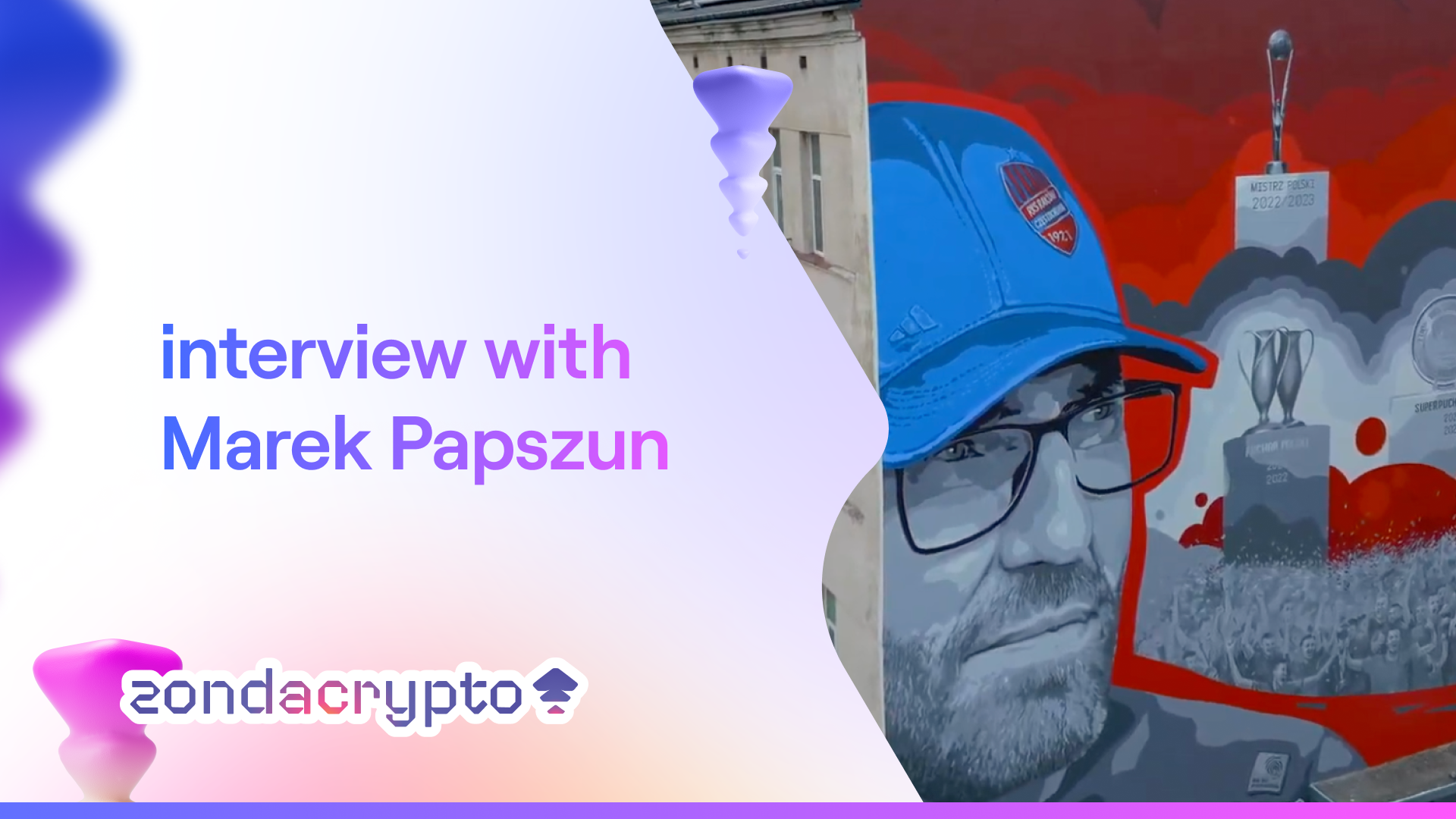
Exclusive Interview with Raków Częstochowa Legend - Coach Marek Papszun!
We participated in the unveiling of Coach Marek Papszun's mural in Częstochowa, proudly sponsored by zondacrypto. ...
Travel Rule in zondacrypto pay
The Travel Rule is a new set of guidelines designed to ensure the security of funds for entities transferring ...

Cryptocurrencies and the operation of the financial system
Blockchain and cryptocurrencies are the fuel that drives today's technological and financial reality. Digital ...

Bitcoin – was it the first decentralised project?
Bitcoin is a revolution that has permanently changed the financial landscape. However, before it was announced to ...

How the ZND platform is redefining cryptocurrency trading
How does the ZND platform solve the problems of the crypto world? It's time to lower the barriers to entry and ...

ZND Earn — build passive income on a compliant platform
Crypto investors always have their eyes wide open for innovative ways to maximise returns and generate passive ...

Unlocking the power of ZND token – your guide to tiered benefits
This comprehensive guide will explore the tiered benefits system of ZND tokens and introduce you to the ...

Grow your account with the ZND Loyalty Programme
A Loyalty Programme will be launched on the ZND Platform as early as the end of 2024. This is a huge range of ...

How does the ZND Affiliate Programme work?
Today, we would like to tell you about the Affiliate Programme.

Learn about the ZND platform features
Check out our comprehensive article to understand interesting features of the ZND platform.

The problem of Byzantine Generals – discussion
Long before the advent of Bitcoin in 1982, a theorem was developed to consider making a common, unified decision ...

Turing completeness – what is it, and how does it work?
What do gas, the Ethereum Virtual Machine and Turing completeness have in common? It turns out – a lot. Check out ...

What is asymmetric cryptography?
Blockchain is based on asymmetric cryptography. Learn about its solutions and its benefits. Read the article ...

What are blockchain forks?
In blockchain, the community can decide about the future of a particular network. In specific cases, a split ...

What are the benefits of completing the KYC procedure?
Registering does not mean that your account is verified. Find out what functionalities you have access to at each ...

What is the Ethereum Virtual Machine?
The Ethereum network was launched in 2015, and since then, its popularity has allowed it to position itself as ...

DeFi – discover decentralised finance!
Decentralised finance is an alternative digital space where you can use your virtual assets to perform a variety ...


zondacrypto Swiss
We've detected you're connecting from Switzerland.
Discover zondacrypto Swiss – our dedicated cryptocurrency platform where you can buy and sell crypto for CHF or EUR. If you have your own crypto wallet, this might be a great option for you.
Remember, funds are sent directly to your wallet or bank account and are not stored on the zondacrypto Swiss platform.


.png)


.png)


.png)

.png)


+pion.png)





.png)


 Go to the Swiss platform